
Field reality is complex.
Pasture, weather, terrain, stock and infrastructure do not fit neatly into generic software.
The hardest farm problems do not live in another dashboard. They live in weather, pasture, incomplete records and the gap between what happened and what people can reliably see.
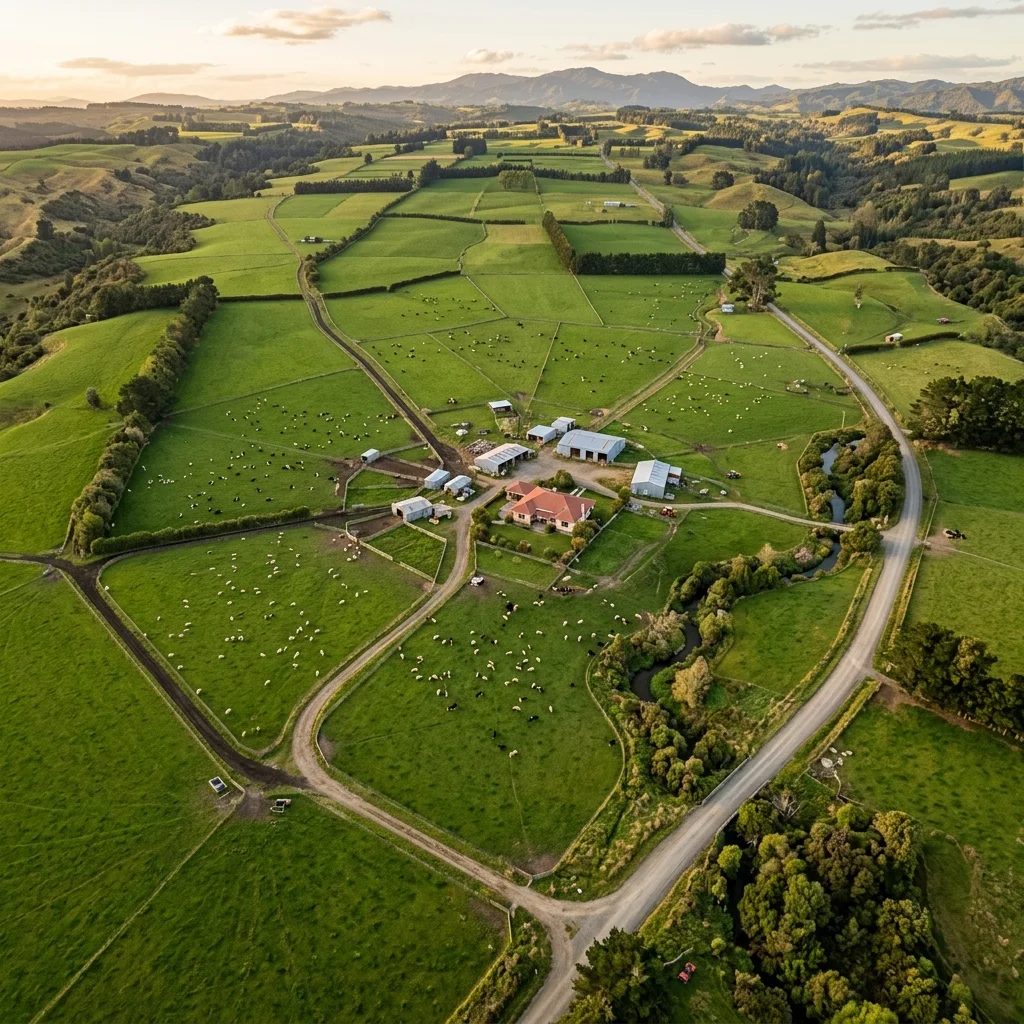
Imagery, notes, maps, readings, tasks and hard-won local knowledge become more useful when they belong to the same farm story.
Pasture, weather, terrain, stock and infrastructure do not fit neatly into generic software.
A reading matters more when it stays connected to its paddock, moment, conditions and history.
Good farm intelligence shows what was captured, where it came from and how it became an insight.
Start with a real farm question. Keep the evidence and its context together. Make the result useful enough to act on—and remember.
Observations become more valuable as they build through time into farm understanding.
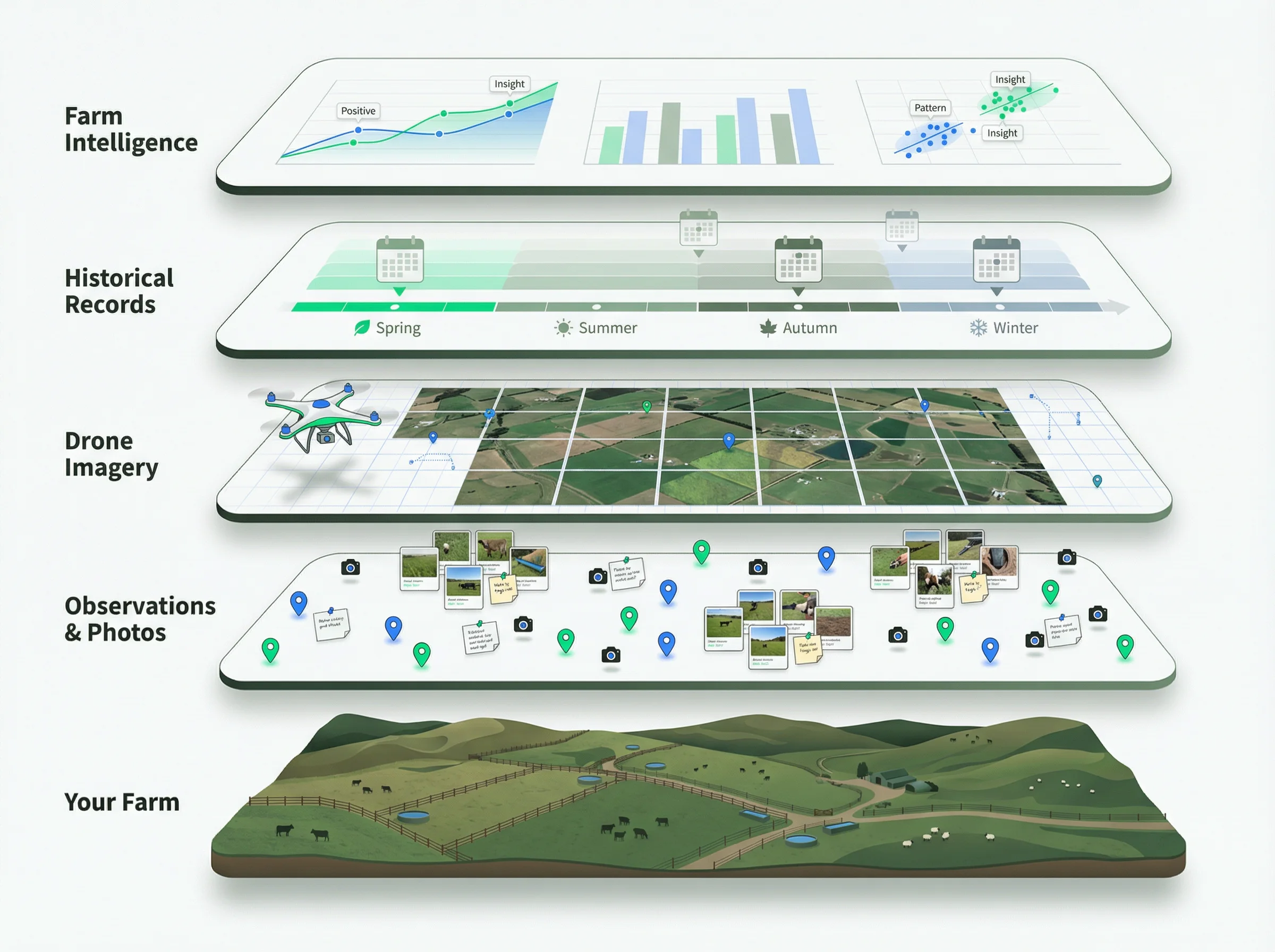
Each person can add what they know without forcing the farm through one rigid workflow.
Keep the farm memory and the decision close.
See the evidence behind the recommendation.
Turn each flight into something useful later.
Give new tools the farm context they need.
Technology earns its place when it helps people see, understand and act—while keeping every insight grounded in the farm.